Take This Cornmeal and Bake It

Spoon Bread w photo

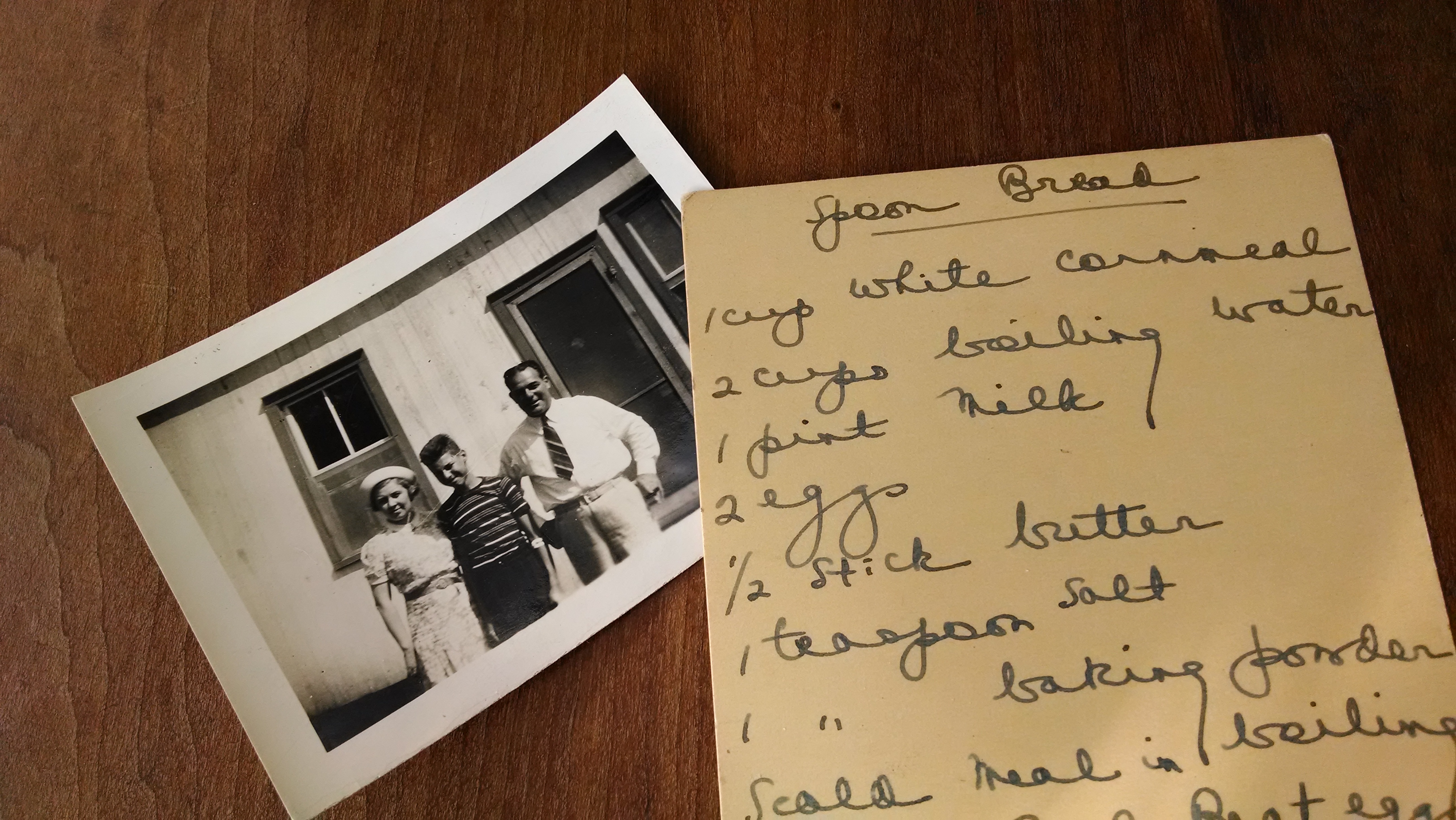
My father, pictured here in the 1930s with his parents, ate almost anything, including leftovers “as long as they were good the first time.” One family favorite, spoon bread, drew on his mother’s Southern roots. This baked combination of cornmeal, milk, eggs, and butter goes back to the colonial days in Virginia. Thomas Jefferson served it at Monticello, his home in Charlottesville. Its name may come from the  Native American word for porridge, “suppone,” or from the spoon needed to eat it. I grew up eating spoon bread as a side dish — though I made a meal on it when my mother served something that I found detestable, such as tomato aspic or chipped beef.

After I moved to New England, I discovered a regional variation of a baked cornmeal dish: Indian pudding. Its name, not surprisingly, refers to its Native American roots, though it used to be called “sagamite.” Along with milk, eggs, and butter, the typical recipe calls for molasses, ginger and cinnamon, making it more of a dessert than a side dish.

I made spoon bread and Indian pudding this weekend and discovered that I now prefer the more assertive flavor of Indian pudding. Maybe the foot of snow outside has something to do with it.
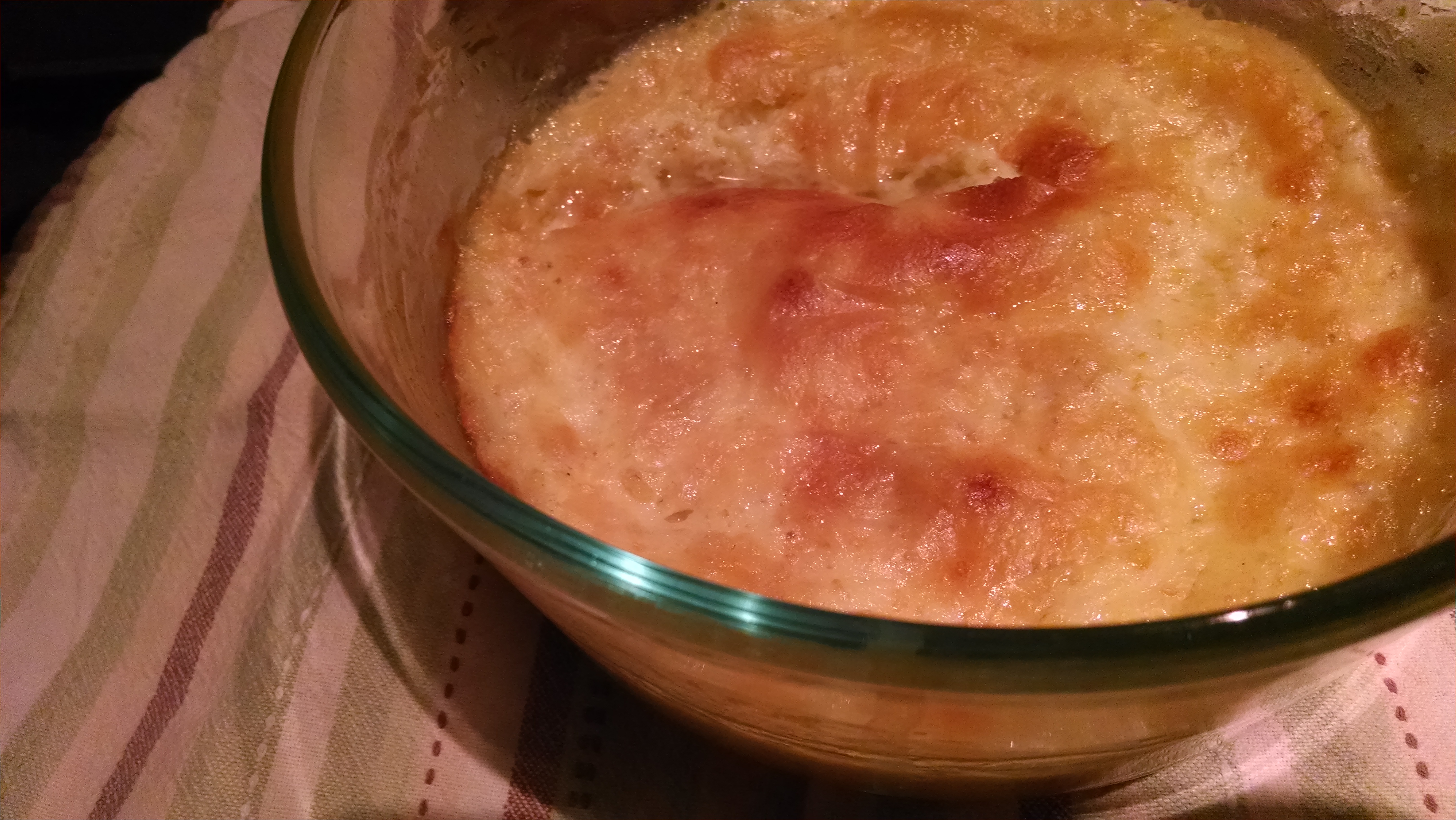
Spoon Bread 2

Silverstein Spoon Bread (circa 1930)

Serves 6

Original:

1 cup white cornmeal

2 cups boiling water

1 pint milk

2 eggs

1/2 stick butter

1 teaspoon salt

1 teaspoon baking powder

Scald meal in boiling water. Cool. Beat eggs. Add to meal with baking powder and salt. Melt butter and add, then milk. Pour in buttered casserole. Bake 45 minutes in slow oven (300 degrees).

Adapted:

1 cup cornmeal (I used yellow, as white cornmeal is difficult to find in New England)

2 cups water

2 eggs, beaten

4 tablespoons melted butter

1 teaspoon salt

1 teaspoon baking powder

2 cups milk

  1. Preheat the oven to 325 degrees (300 degrees proved too low for proper baking). Butter a 2-quart casserole.
  2. Bring the water to a boil in a large saucepan. Slowly stir in the cornmeal. Lower the heat to a simmer and continue stirring until the mixture begins to thicken, about 5 minutes. Set aside to cool, about 15 minutes (it does not need to be completely cold).
  3. Add the eggs and butter to the cornmeal and stir to combine.
  4. Add the baking powder and salt; stir again.
  5. Add the milk and stir to make a smooth batter.
  6. Pour the batter into the casserole and bake until golden and puffy, about 45 minutes. Serve with a spoon.
Posted in Food, history, memoir | Tagged , , , | Leave a comment

‘Bullet’ Joe and Big Boy

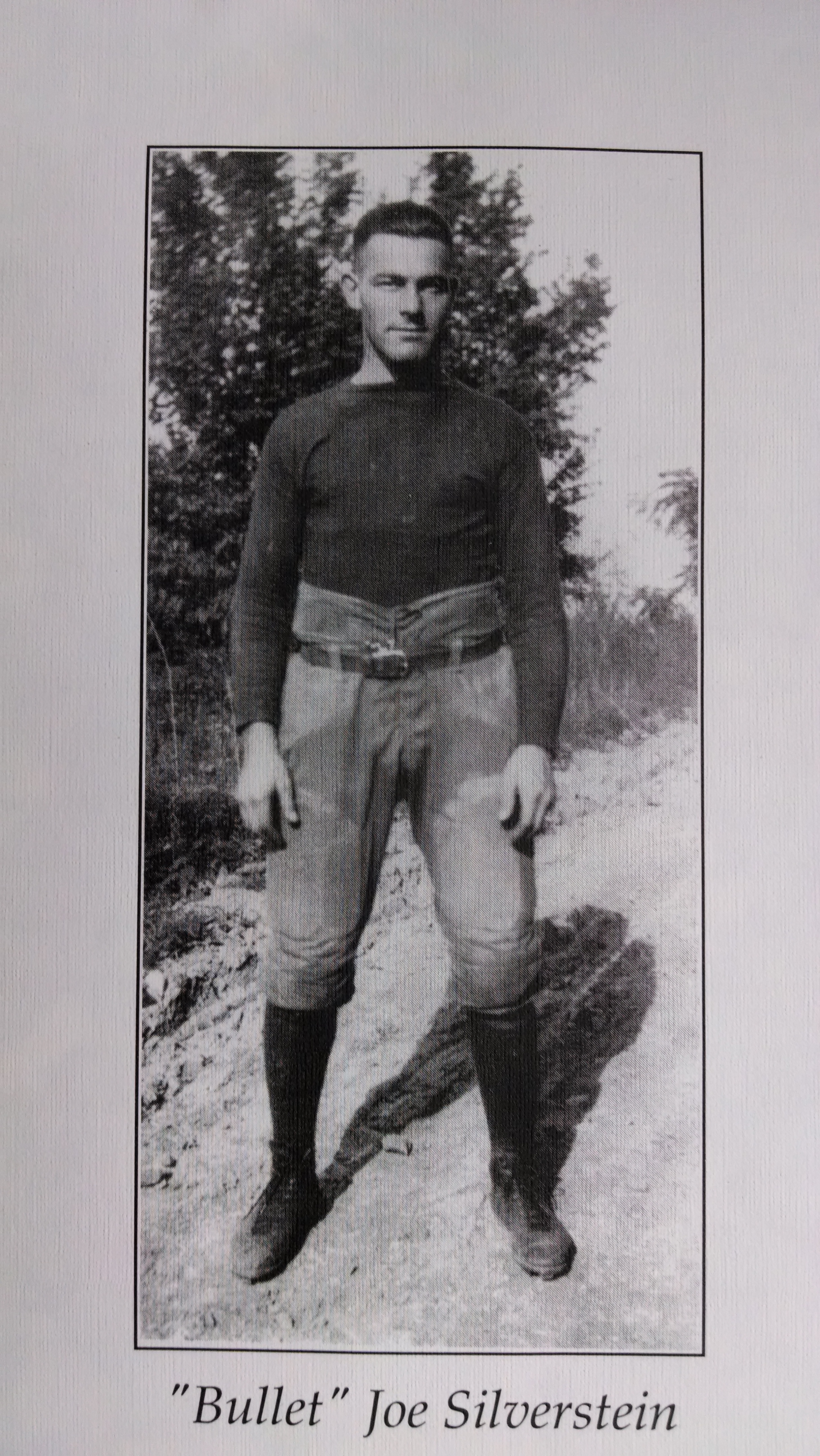
Bullet Joe

Back in the days of leather football helmets (not mandatory) and canvas-and-leather shoulder pads, my grandfather captained  his football team at Washington & Lee University to a Southern Championship in 1919. Nicknamed “Bullet Joe” because of his running speed, he also made all-Southern teams in 1919 and 1920. He’s in the school’s Athletic Hall of Fame.

Grandpa Joe gave up football to get married and raise his family in Charleston, West Virginia. Too bad none of us inherited his athletic prowess. My father, nicknamed “The Professor,” absent-mindedly tripped over his feet and preferred books to the gridiron.

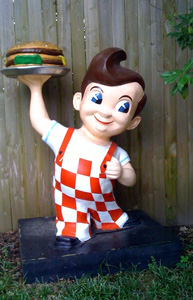
The next big football star from Charleston, Alex Schoenbaum, an all-American tackle for Ohio State in the 1930s, started what became the Shoney’s Big Boy restaurant chain.

Shoney's Big Boy

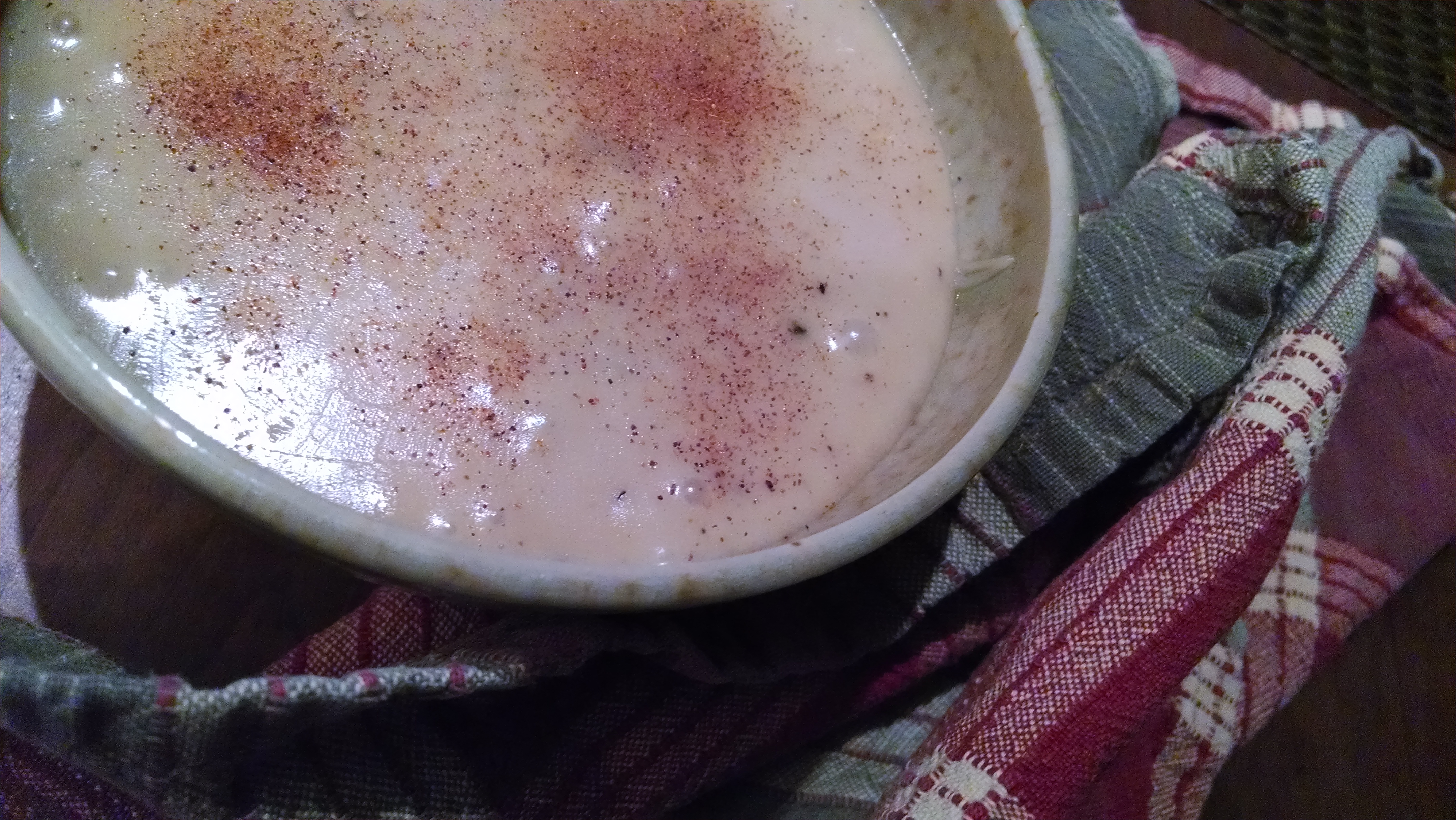
In honor of my grandfather, I made this unnamed beer and cheese recipe from my grandmother’s files for a Super Bowl party dip. Though the original calls for serving it over toast, like Welsh rarebit, I thought it would work much better as a dip. Scooping up a portion with a chip, one of my friends said, “It’s like a Velveeta dip without the Velveeta.” That works for me! Just make sure you make it at the last minute because it needs to be served hot.

Beer and Cheese Dip for ‘Bullet’ Joe (circa 1940)

Beer Dip

Original:

1/3 pound cheese per person, grated on coarsest grater. Add beer or ale to cheese in saucepan. Stir constantly. Add enough beer for consistency. When done cook only long enough for mixture to get creamy. Turn off gas. Add pepper, salt, dry mustard, Worcestershire sauce. Serve on toast in a soup plate.

Adapted:

2/3 pound sharp cheddar cheese, coarsely grated (approximately 4 1/2 cups)

1/4 cup beer (I used Porter but almost any style will do)

1/2 teaspoon Worcestershire sauce

1/4 teaspoon dry mustard

1/4 teaspoon freshly-ground black pepper

Paprika, for sprinkling

1. Place the cheese a saucepan, preferably with a heavy bottom.

2. Add the beer and warm over low heat, stirring frequently, until both ingredients melt together into a smooth, creamy consistency, about 5 minutes.

3. Remove the pan from the heat. Add the Worcestershire sauce, mustard, and black pepper. Stir to combine.

4. Place in a serving bowl and sprinkle with paprika. Serve with chips. Makes about 1 1/2 cups of dip. If the dip gets too cold, reheat it in the microwave (assuming the bowl is microwave-safe) for about 30 seconds, then stir.

Posted in Food, History, memoir | Tagged , , , , | Leave a comment

Plain Old Baked Butterscotch Apples

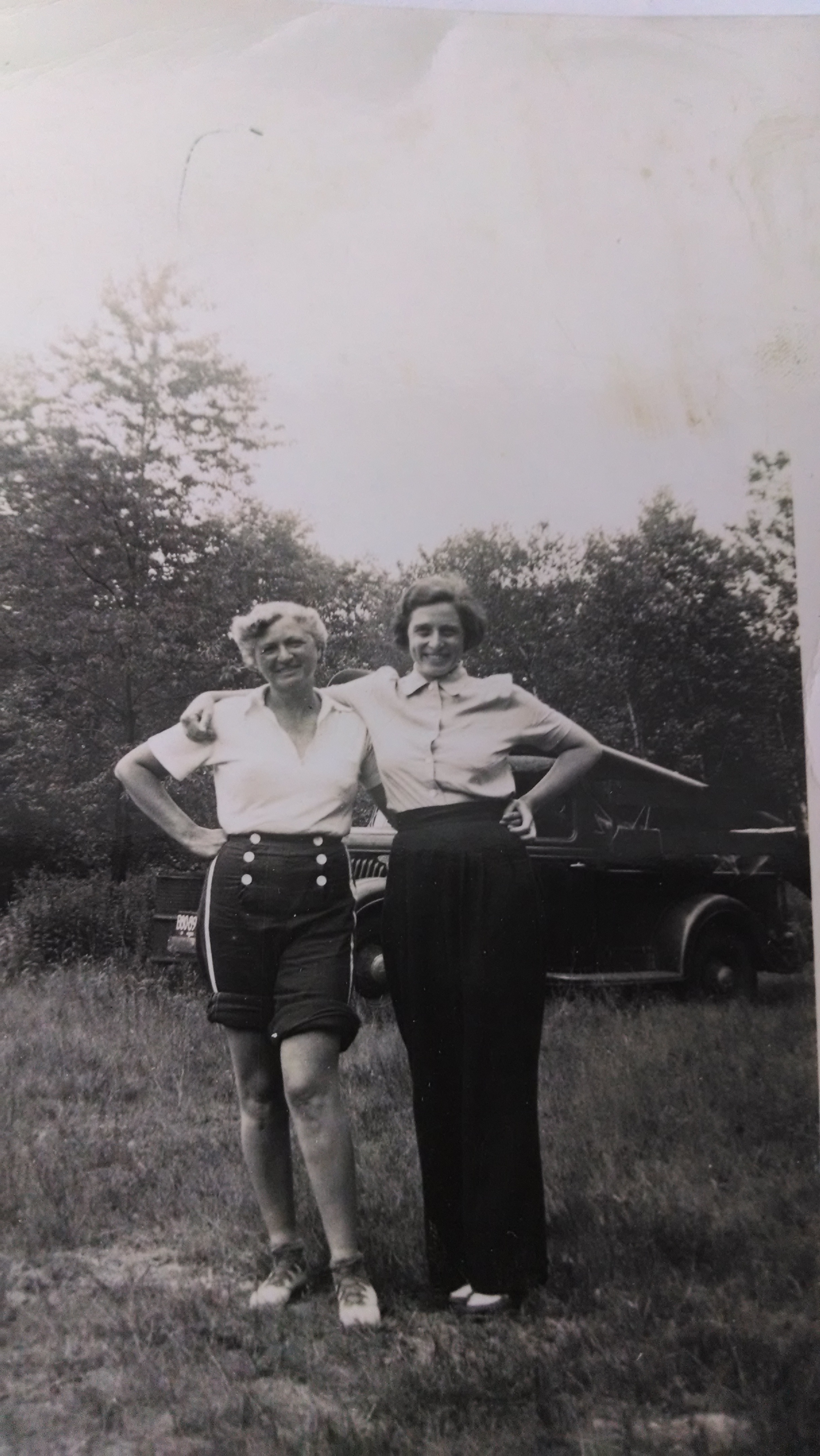
For someone who spent little time in the kitchen, my grandmother, Hanna (she’s in slacks; her sister is on her left), wrote down and saved a lot of recipes. Neither she nor my grandfather liked what they termed “fancy food.” Instead of spending time in her galley-style kitchen in Richmond, Virginia, she sat for hours at her telephone table in the hall. There, she called or wrote notes to a wide circle of family and friends scattered from her hometown of Mount Vernon, New York to Richmond. Her recipes come from many of these friends or from the Richmond Times-Dispatch newspaper, which she spread out every morning with her tea-and-toast breakfast – once she tracked down her reading glasses.

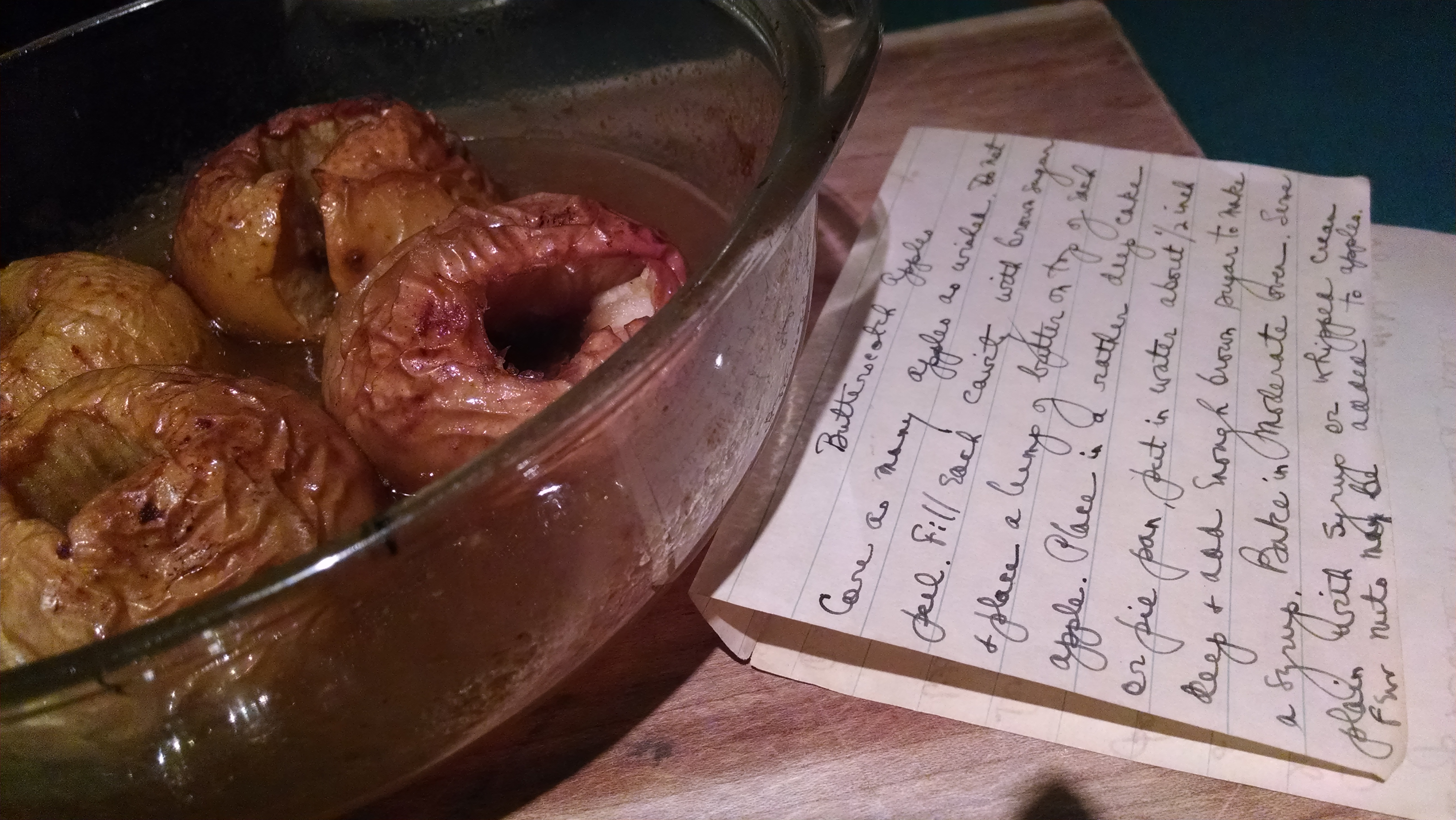
She didn’t write down who gave her this basic baked apple recipe but it suited her plain tastes. I added a bit of cinnamon and lemon juice to the apples to give them more flavor. The syrup benefited from a little brandy, nudging it perhaps perilously close to “fancy food” territory, but just right for my 21st century sensibilities.

apples 2

Hanna Mann’s Butterscotch Apples (circa 1930)

Original:

Core as many apples as wished. Do not peel. Fill each cavity with brown sugar and place a lump of butter on top of each apple. Place in a rather deep cake or pie pan, put in water about ½ inch deep and add enough brown sugar to make a syrup. Bake in a moderate oven. Serve plain with syrup or whipped cream. A few nuts may be added to apples.

Adapted:

4 apples, cored but not peeled

Approximately 6 tablespoons brown sugar

4 teaspoons chopped nuts, such as walnuts or pecans (optional)

2 tablespoons butter

Juice from ½ lemon

Cinnamon, for sprinkling

Approximately ½ cup water

1. Preheat the oven to 350 degrees. Place the apples in baking pan or pie dish with at least a two inch tall rim.

2. Mix together the nuts, if using, with 4 tablespoons of the brown sugar. Spoon the plain brown sugar or brown sugar mixture into the cavity of each apple. You may need to adjust the quantity of sugar depending on the size of your apples so you fill each cavity.

3. Place 1/2 tablespoon of butter on top of each apple, centering it over the cavity.

4. Sprinkle all the apples with lemon juice and cinnamon.

5. Pour water into the bottom of the pan so it comes ½ inch up the sides of the apples. You may need to adjust the quantity of water depending on the size of your pan.

6. Place the additional 2 tablespoons of brown sugar in the water and use a fork to break up any big lumps. The sugar will dissolve as the apples cook. (My syrup was kind of thin so next time, I would add another 2 tablespoons of brown sugar to the water).

6. Bake 1 ½ hours, or until the apples are soft and a syrup forms in the bottom of the pan. (I thought the syrup was too thin so I put it in a saucepan with 2 tablespoons of brandy, and let it gently boil for 10 minutes to reduce it a bit and give it more flavor).

7. Serve each apple topped with syrup or whipped cream.

Posted in Food | Tagged , , , | Leave a comment

‘One of the Housekeeper’s Necessaries’

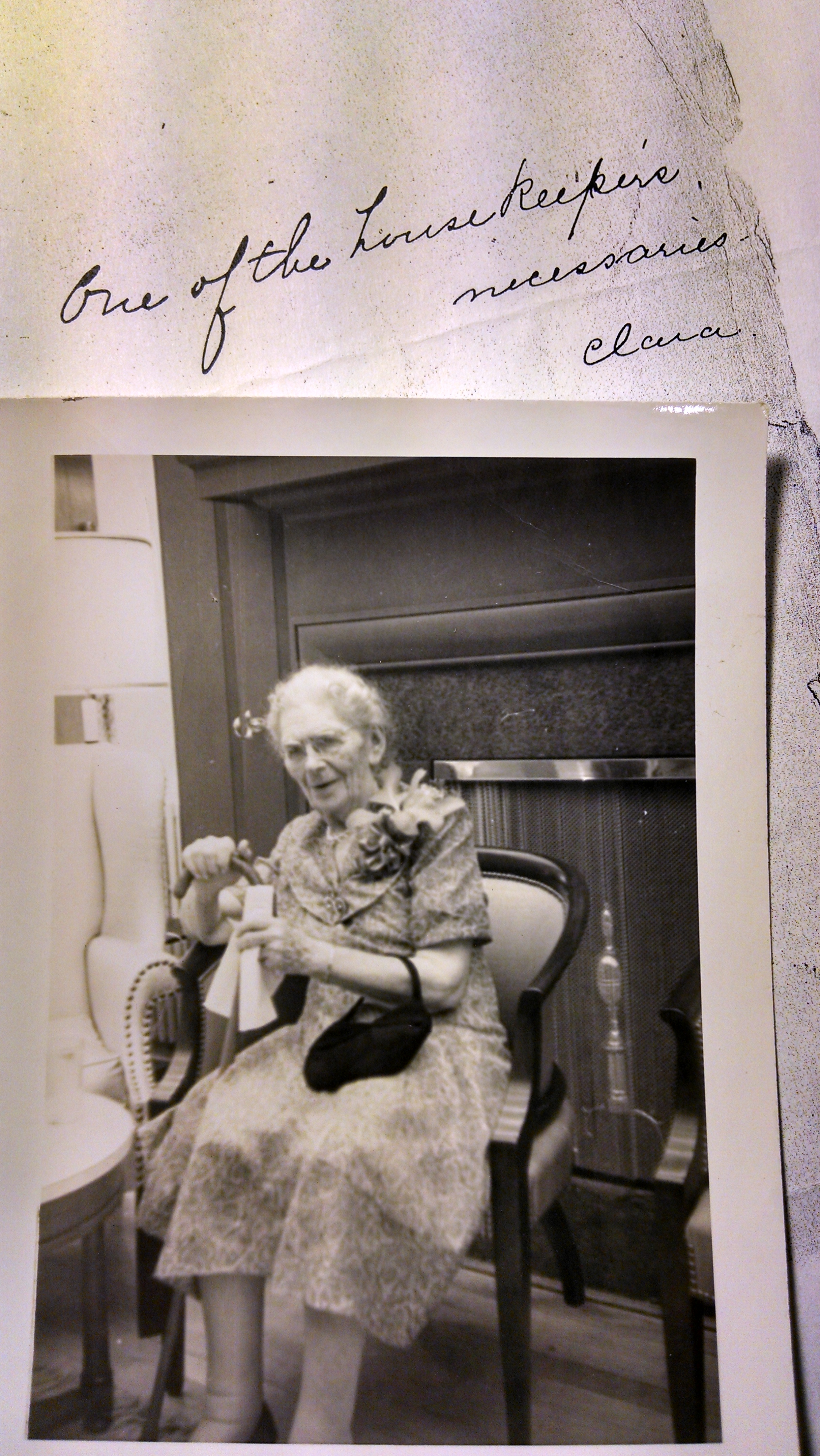
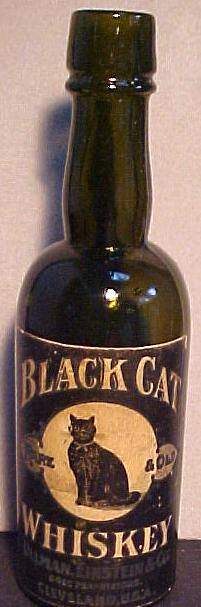
Marmee 4I am named after my great-grandmother, Clara, whose parents emigrated from a small village in southern Germany to Cleveland, Ohio in the 1870s. She looks genteel in this photo but her family supported itself with the rough-and-tumble Black Cat Whiskey brand.

4.bottle_black_cat

Here’s more about the family’s history in Ohio:

http://pre-prowhiskeymen.blogspot.com/2012/02/morris-ullman-tossed-black-cat-to.html

Nobody in the family remembers Clara as a cook but I found a few recipes that she scrawled inside her copy of Aunt Babette’s Cook Book. Clara moved to Richmond, Virginia around 1890 to marry my great-grandfather, whose family came from the same village in Germany. The cookbook, originally published in 1889 by the Bloch company of Cincinnati, reflected the tastes of newly assimilated American Jews. Babette explained how to make Purim cookies on one page and trayf (non-Kosher) lobster salad on another. Since Clara never kept Kosher, this book appealed to her so much that she called it “one of the housekeeper’s necessaries” in a note inside the front cover.

Reclaiming Clara’s handwritten recipes turned out to be more difficult than I imagined. “Sand Cake” calls for 1 lb. butter, 1 lb. sugar, 1½ lbs. flour, 3 raw eggs, 4 hard boiled yolks, cinnamon & brandy. That’s it! No directions. When her recipes did include a bit more information, the stained pages sometimes made key words illegible.

Perhaps it’s no surprise that the “Date Torte” I tried turned out like no torte I’ve ever eaten. The ingredients fit the definition of torte in the Food Lover’s Companion as a cake made with little or no flour but ground nuts or breadcrumbs, eggs, sugar, and flavoring. But my torte stuck to the pan and crumbled when I cut it. Oh, well. My husband and I dug our portions out of the pan with spoons and found it a tasty, if gooey, combination of dates and nuts. Here I served an extremely misshapen slice on doily she crocheted.

Marmee Date Torte 1

I’ve written up the work of two Claras, but I welcome suggestions about how to improve the next batch.

Clara Ullman’s Date Torte

Makes 1 (9-inch) torte

Original:

1 cup sugar

1 cup dates

1 cup English walnuts

3 eggs, beaten separately

2 tablespoons flour

1 teaspoon baking powder

Vanilla

Salt

No directions

Adapted recipe:

3 eggs

1 cup sugar

1 teaspoon vanilla extract

2 tablespoons flour

1 teaspoon baking powder

¼ teaspoon salt

1 cup pitted, chopped dates (about 6 ounces)

1 cup roughly chopped English walnuts or pecans (about 4 ounces)

1. Preheat the oven to 350 degrees. Grease a 9-inch pie plate or round baking pan.

2. In a large mixing bowl, beat the eggs with a whisk (electric mixers probably hadn’t been invented yet so that’s why I used the whisk)(also, her original instruction of eggs “beaten separately” probably means separate the eggs and beat the yolks and the whites separately, but I thought of that after I already made the torte)

3. Add the sugar and continue whisking until light and fluffy. Stir in the vanilla.

4. In a small bowl, stir together the flour, baking powder and salt. Stir into the egg mixture.

5. Stir in the dates and nuts (I used pecans because that’s what I had in my pantry).

6. Pour the batter into the prepared pan. Bake for 25 minutes until golden on top. (At this point it was still raw inside so I turned down the oven to 325 degrees and baked it for 5 minutes more. Then I turned the oven off and let it sit inside for 10 minutes).

7. Let cool before slicing into wedges for serving.

Posted in cookbooks, Food, History, memoir | Tagged , , , , , , , , | 1 Comment

New Year, Old Egg Nog Recipe

DSCN0009When my Grandma Bertie was growing up in coastal North Carolina about 100 years ago, she dutifully wrote down recipes from her mother, her aunts, and the ladies of the town. Even though she went away to college – uncommon for the time – she brought along her recipe book and kept adding to it for the rest of her life. My aunt recently shared the book with me. This hand-scrawled culinary chronicle of my grandmother’s life took her from Little Washington, N.C. to Charleston, West Virginia, where she married and raised her family.

I copied down several of the recipes and brought them home to my kitchen in Boston, hoping to learn more about my grandmother and family history by making some of her favorite dishes. By the time I knew Grandma, she was a widow and didn’t cook much. She liked afternoons at the art museum or the movies better than being cooped up in her kitchen.

The New Year inspired me to start sharing her recipes, plus other recipes from my family and from historic American cookbooks. I’ll make the recipes and tell the stories behind them and I invite you to send me your old favorites from your family or other sources.

This egg nog recipe, appropriate for the New Year, is the only one that I found from my great-grandmother, Bertha. She grew up in Little Washington and met my great-grandfather, a Jewish immigrant from Poland, when he came to town to open a business. When they married, she converted to Judaism and they raised the only Jewish family in the town at the time.

My great-grandmother’s egg nog is nothing like what comes from a carton, which reminds me of paint. This version is light and fluffy, perfumed with whiskey. Her “ginger ale glasses” for serving (each one is about 8 ounces) suggests that she served the egg nog in a punch bowl. By the time the cream and egg whites are whipped, this does make about a gallon, so plan accordingly or feel free to cut the recipe in half. Cheers!

Susman family

Mrs. B.L. Susman’s Egg Nog (circa 1890)

Makes 12-15 ginger ale glasses

1 dozen eggs
12 tablespoons (3/4 cup) granulated sugar
1 pint (2 cups) heavy cream
1/2 pint (1 cup) whiskey, or more as desired
Nutmeg, to taste

Original directions:
Add sugar to yolks of eggs. Beat well. Whip cream very thick and sweeten to taste. Whip egg whites stiff and mix egg whites and cream, whipping well together. Add whiskey to the yolks and sugar. Then add cream and whites – a dash of spice. Mix well together and add more sugar to taste.

Adapted directions (so you can more easily follow the recipe):
1. Separate the eggs, placing the whites into one large mixing bowl and the yolks in another.
2. Add the sugar to the bowl of yolks and beat until well combined.
3. Pour the cream into a third bowl. Add confectioner’s sugar to taste (I added about a tablespoon). Whip the cream until very thick.
4. Whip the egg whites until stiff peaks form. Mix in the whipped cream, whipping to combine well.
5. Add the whiskey to the yolk mixture and stir to combine. Fold the egg white-cream mixture into the bowl of yolks. Add a dash of ground nutmeg. Add more sugar to taste if necessary. (I did not think it needed more sugar so I left it out).
6. Mix together and ladle into individual glasses. Garnish each serving with freshly-shaved nutmeg.

Posted in Food, history, memoir | Tagged , , , | Leave a comment