
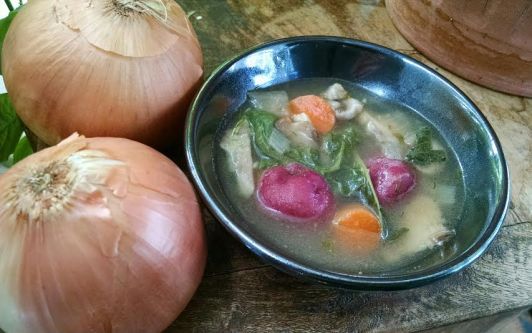
 Springtime snow? Why, yes, if you live in New England. A storm arrived this weekend to smother the daffodils and forsythia blossoms. Forget about asparagus and pea tendrils. This is still soup weather. Continue reading
Soup for a Snowy April Day

Posted in cookbooks, Food, History
Tagged 1980s, diner, kale, Maine, Maine Diner, New England, potato, soup
Leave a comment
A Pale Green Spring Cocktail
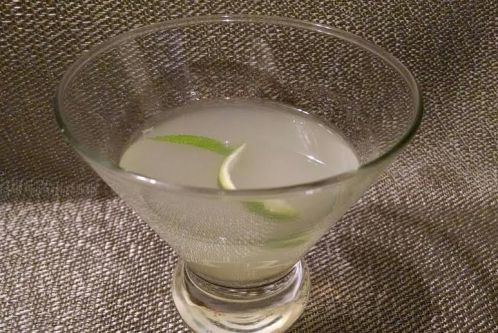 Boston’s first day of spring started with snowstorm, but the white stuff soon melted and the daffodils perked up again. In this blustery, changeable season, I crave a palate cleanser. Enter the Snap, a drink I found in The Bartender’s Guide by Peter Bohrmann Continue reading
Share this:

Cornbread for a Harsh Climate
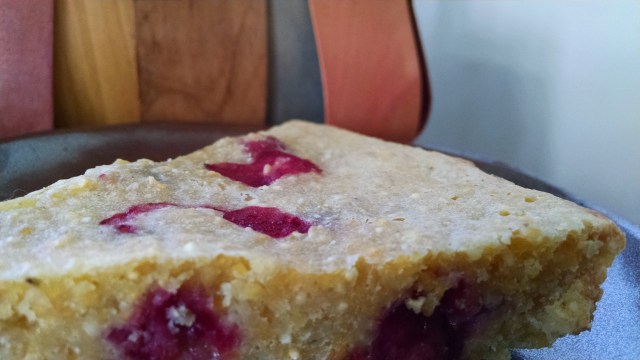 In the early 1600s, the first English settlers in Massachusetts saw a “wilderness,” yet the Native Americans saw a “rich landscape” that included corn, fruits, game, and dozens of varieties of fish, The Pleasure of the Taste cookbook tells us. Continue reading
Share this:

Posted in cookbooks, Food, history, History
Tagged Boston, corn, cornbread, cranberry, English, Massachusetts, Native American, Partnership of Historic Bostons, strawberry, The Pleasure of the Taste
2 Comments
For Washington’s Birthday: Easy Cherry Sherbet from the 1930s
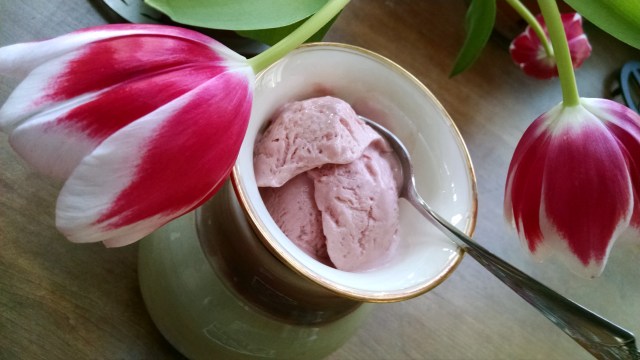 The 1930s – the era that brought us the Great Depression as well as an end to Prohibition – also brought us some of our most enduring kitchen convenience products, such as Miracle Whip and Bisquick. This was also the decade when many American homeowners purchased their first electric refrigerator and freezer. Flexible metal ice cube trays, also introduced in the 1930s, put drinks on the rocks within easy reach.
Metal ice cube trays figure prominently in the handwritten Cherry Sherbet from my Richmond grandmother’s handwritten recipe files. Continue reading
Share this:

A Southern Cocktail for a Snowy Week

One snowstorm down, two more to go this week (forget the Groundhog Day prediction for an early spring). For a diversion, I pulled out Charleston Receipts (Junior League of Charleston, 1950) from my shelf full of Southern cookbooks. The “Simons’ Special” looked like the right potency Continue reading
Share this:

Posted in cocktails, cookbooks, Food, history
Tagged 1950s, Charleston, Charleston Receipts, cocktail, gin, Junior League, lemon, limequat, rum, snow, South Carolina
Leave a comment
Stewed Groundhog: ‘The Cleanest Meat One Can Find’
 Given this year’s warm winter in New England (so far, so good), I expect that Punxsutawney Phil will predict an early spring on Groundhog Day. The American version of the holiday, celebrated February 2, is 130 years old. In the 19th century, American farmers used to say, “Groundhog Day, half your hay.” February 2 is halfway through winter, and careful farmers kept half their hay to see their animals through the rest of the season.
Punxsutawney Phil, the groundhog that comes out of his burrow each year, probably enjoys special, protected status because he’s a celebrity. But the groundhogs in West Virginia have no such luck. I recently found a recipe for stewed groundhog in the Best of the Best from West Virginia Cookbook (Quail Ridge Press, 2002), which I bought during a visit to Charleston, my father’s hometown. The recipe originally came from the Pocahontas County Hunter’s Cookbook. The introductory note claims the groundhog offers “the cleanest meat one can find.” I’ll take their word for it! Besides, where would I go groundhog hunting in Boston?
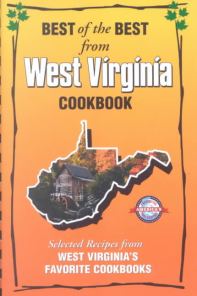 Ground Hog (1980s)
After the ground hog is skinned, remove every bit of fat from the meat. Cut meat into pieces, wash and drain. Use only the meaty pieces if you like. The good pieces of 2 ground hogs make a nice platter of meat.
Parboil the meat in plain salt water and 1/2 teaspoon baking soda. In the parboiling, watch the pot, as it is bad to foam up and run over. Drain and wash meat.
Put the meat in a large cooking pot. Add 2 quartered onions and 2 or 3 carrots. Boil gently until meat is tender.
Remove meat, roll in flour and brown in a heavy skillet in margarine or butter, adding salt and pepper, and if desired, any other seasoning that you might use on any meat.
Share this:

Posted in cookbooks, Food
Tagged 1980s, Charleston, groundhog, Groundhog Day, Punxsutawney Phil, Stew, West Virginia
Leave a comment
Pecan Pie to Honor Martin Luther King Jr.
 In his too-short lifetime, Martin Luther King Jr. traveled more than 6 million miles and gave over 2500 speeches, according to a story in the Huffington Post. To keep going, he often reached for fried chicken or pecan pie Continue reading
Share this:

Posted in Food, history, History
Tagged 1940s, Atlanta, Callie Williams, Clementine Paddleford, Georgia, Martin Luther King Jr, New York Herald Tribune, pecan, pecan pie, pie, Rich's Department Store
Leave a comment
‘Tossed Salad Superb’ for a Healthy Start
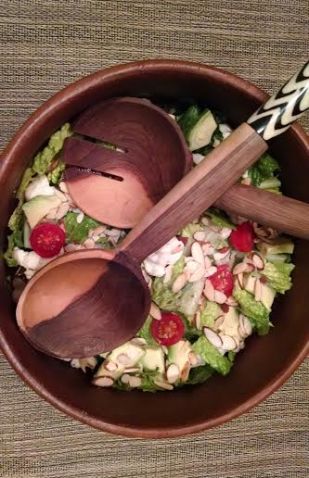 Pre-washed greens make for the simplest salad possible: open the plastic container, put the leaves in a bowl, and add dressing. In the middle of winter, when the only produce on the shelves comes from greenhouses or countries on the other side of the equator, it’s tempting to serve this side dish every night. Good Housekeeping’s Book of Salads (1958) pushes back against this kind of complacency Continue reading
Share this:

Posted in cookbooks, Food, History
Tagged 1950s, cauliflower, Good Housekeeping, lemon, salad, watercress
Leave a comment
Christmas Welcoming Bread
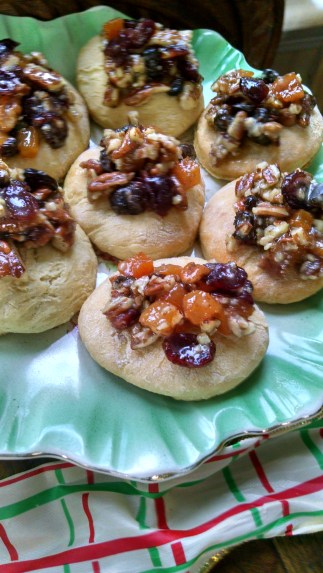 Take ordinary baking powder biscuits, top them with a sugary fruit and nut mix, and suddenly they transform into Christmas bread. That’s what the Michie Tavern in Charlottesville, Virginia served in the 1700’s, Continue reading
Share this:

Posted in cookbooks, Food, History
Tagged 1780s, baking, biscuits, bread, Charlottesville, Christmas, icing, Junior League, Michie Tavern, Richmond, Virginia
Leave a comment
6-4-2-1 Equals a Family Cocktail
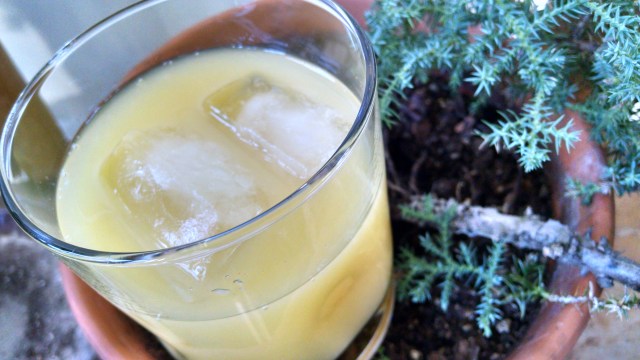 The recipe paper-clipped inside one of my grandmother’s cooking pamphlets sounds like a scientific formula: 6 orange juice, 4 ging, 2 vermouth, 1 lemon. Continue reading
Share this:

Posted in cocktails, Food, History, memoir
Tagged 1930s, cocktail, ginger ale, lemon juice, orange juice, Prohibition, Richmond, vermouth, Virginia
Leave a comment


 heritagerecipebox